The Homeowner’s Guide to Emergency Repairs: What to Do Before Help Arrives
Emergencies have a way of catching us off guard. One moment, you’re enjoying a quiet evening—then, suddenly, water is pooling on your floor or a storm shatters a window. It’s stressful, it’s messy, and it’s urgent. But knowing just a few key steps can make all the difference until your handyman arrives.
At The CSRA Handyman, we’ve seen it all: gushing pipes, flickering lights, shattered glass, and wind-tossed debris. We’re here to help you feel prepared and confident, even in those first tense moments before a pro gets to your door.
Common Home Emergencies: What You Might Face
Every home is vulnerable to a handful of fast-moving problems. Let’s focus on the four that crop up most often for families in our area:
Water Leaks
Plumbing can be a trickster. Pipes burst, hoses split, and water heaters fail when you least expect it. The moment you notice water where it shouldn’t be—under the sink, in the ceiling, or by the washing machine—time is of the essence.
Immediate steps:
- Find the source—look for dripping pipes, pooled water, or wet drywall.
- Turn off the nearest water valve. For big leaks, use the main shutoff (usually by the street or basement wall).
- Unplug nearby electronics to prevent shock.
- Use towels or buckets to catch water and limit spread.
- Snap photos of the damage for insurance.
Power Outages
A sudden blackout can feel like someone just pulled the plug on your whole life. Fridges get warm, alarms go silent, and you’re left in the dark. While most outages are resolved quickly, some storms or equipment failures can leave you waiting longer.
Immediate steps:
- Check your breaker panel for tripped circuits.
- See if neighbors are affected (could just be your house).
- Unplug sensitive devices—protect TVs, computers, and appliances from surges.
- Use flashlights, not candles, to stay safe.
- Report the outage to your utility provider.
Broken Windows
Storms, accidents, or even a misfired ball can leave you with broken glass and a gaping hole. Broken windows mean lost heat, less security, and quick weather damage inside.
Immediate steps:
- Carefully clear away loose glass (wear gloves).
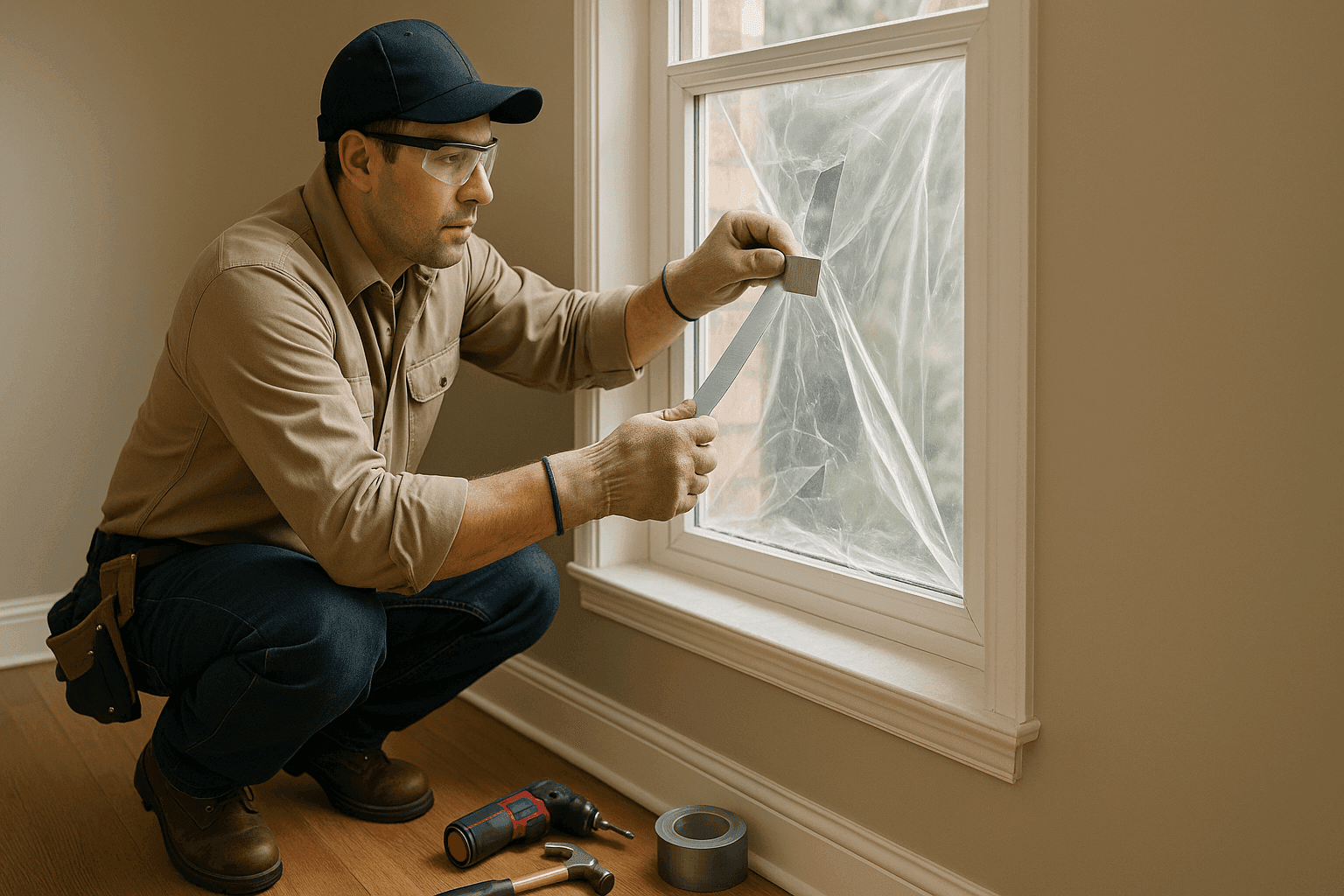
- Cover the opening with heavy plastic or plywood.
- Use duct tape to keep cracks from spreading.
- Keep kids and pets away from the area.
- Document damage with photos.
Storm Damage
Severe weather can leave a trail of chaos—downed branches, damaged roofs, flooded crawlspaces, or battered siding. When the wind howls, it’s not just the outside that takes a hit.
Immediate steps:
- Stay indoors until danger passes.
- Visually inspect for hazards: downed power lines, broken gutters, missing shingles.
- If safe, cover exposed areas with tarps or boards.
- Remove debris only if it’s safe to do so.
- Take photos for your records.
Quick Safety Checklist 🛑
When facing home emergencies, a few basics will help keep everyone safe:
- Know your main shutoffs: Water, gas, and electricity—locate these in advance.
- Keep emergency numbers handy: Utility company, handyman, and poison control.
- Don’t wade into unknown water: It could hide electrical shock risks.
- Avoid broken glass and sharp debris: Wear shoes and gloves.
- Evacuate if there’s fire or strong gas smell: Safety first.
- Have a flashlight and batteries ready: Candles are a fire hazard.
- Store a first-aid kit and basic tools nearby: Bandages, pliers, duct tape, and a wrench.
DIY vs. Call a Pro
It’s tempting to try and fix everything on your own, especially in a pinch. But not all repairs are safe for DIY—some are best left to trained hands.
When DIY Makes Sense
- Small leaks under a sink you can quickly clamp off.
- Minor drywall holes or loose curtain rods.
- Covering windows with plastic until a handyman arrives.
- Resetting a tripped breaker (if you know how).
When to Call the Handyman
- Major leaks or flooding that affect more than one room.
- Electrical problems you can’t pinpoint—never touch exposed wires.
- Extensive storm or structural damage.
- Broken windows with sharp, hanging glass.
- Problems with gas lines or appliances—these are never safe for DIY.
If you’re unsure, it’s always safer to call for help. There’s no shame in playing it safe.
What Pros Do On Arrival
A seasoned handyman walks in and sees the chaos with a clear head. Here’s what you can expect when The CSRA Handyman arrives:
- Assessment: A quick, thorough look at the damage, checking for hidden risks.
- Immediate action: Shutting off utilities, securing unsafe areas, and stopping leaks.
- Temporary fixes: Board-ups, tarps, or quick patches to contain the problem.
- Clear communication: We’ll explain what’s needed, how long it’ll take, and what to watch for next.
- Next steps: If repairs need permits or specialists (like electricians per National Electrical Code), we’ll let you know.
We’re not just fixing things—we’re making your home safe and stable again.
Prevention & Maintenance
Most emergencies can be softened—or even avoided—with regular maintenance.
Tips for Staying Ahead
- Inspect pipes and hoses every few months for leaks or wear.
- Test smoke detectors and GFCI outlets (those special bathroom/kitchen plugs).
- Clean gutters each season to prevent water backup.
- Check weatherstripping on doors and windows.
- Trim trees and remove dead branches before storm season.
- Review your insurance policy—know what’s covered and what’s not.
A little effort now can save a mountain of stress later.
Costs & Time Factors
Emergencies come with a price—but quick action can help limit damage.
- Water leaks: Fast response usually means less soaked flooring or drywall to repair.
- Electrical problems: Simple fixes (like resetting a breaker) are quick; wiring repairs take longer, especially if safety codes are involved.
- Window repairs: Board-ups can be done same-day; full replacements may take days.
- Storm cleanup: Minor debris is fast, but structural repairs can stretch out over weeks.
Labor and parts vary depending on the job. The sooner you call, the sooner your home is back to normal.
When It’s an Emergency
Some situations can’t wait—even a few hours. If you notice:
- Active flooding or water pouring in
- Sparking outlets or burning smells
- Broken windows that leave your home unsecured
- Major storm damage exposing your home to the elements
- Gas leaks (rotten egg smell)—evacuate and call 911 first
These are true emergencies. Don’t wait—get professional help right away.
Your Basic Emergency Kit
Every homeowner should have a grab-and-go kit for sudden repairs:
- Flashlight and extra batteries
- Work gloves and sturdy shoes
- Duct tape and heavy plastic sheeting
- Basic tools (screwdrivers, wrench, utility knife)
- Towels or rags
- First-aid supplies
- Phone charger (battery backup)
- List of emergency contacts (including your preferred handyman)
Keep this kit where it’s easy to reach—near the kitchen or main entrance.
FAQ
What’s the first thing I should do during a water leak?
Shut off the nearest water valve. If you can’t find it, use the main shutoff. Then unplug electronics and move valuables out of the way.
Can I fix a broken window myself?
You can cover it temporarily with heavy plastic or cardboard. But leave full repairs and glass replacement to a handyman for safety.
What if I smell gas?
Leave your home immediately and call 911 from outside. Don’t use switches or phones indoors.
How soon should I call for help?
If there’s any risk to safety or major property damage, call The CSRA Handyman right away. For less urgent repairs, document the problem and schedule a visit as soon as you can.
Local & Seasonal Considerations 🌧️
In our area, heavy rains and summer storms can trigger leaks and power outages. Winter brings frozen pipes and drafty windows. Plan ahead:
- Before storms: Clear debris from gutters, check window seals, and secure outdoor furniture.
- In winter: Insulate pipes, check weatherstripping, and know where your main shutoffs are.
- Spring and fall: Test alarms, inspect for loose siding, and schedule seasonal maintenance.
Staying ready for the weather keeps those emergency calls to a minimum.
Emergencies can rattle even the calmest homeowners. But with a few practical steps—and a friendly handyman on speed dial—you can keep your home safe, dry, and secure.
Call The CSRA Handyman now — or reach us anytime at 844-460-8402 .